The Most Important "Omni"
If you really want to see sparks fly (as if that doesn't happen on a daily basis too much already), try sharing what you believe to be characteristic about God (if you believe in God to begin with). Actually, if you can lay down your defenses enough to truly listen to others, it is remarkable what you may find out about what somebody else may think about God.
That aside, I am quite surprised what many Christians attribute to God often unquestionably, and also with a stubborn unwillingness to understand where their beliefs have come from. SPOILER!: A lot of those characteristics, while they do have historical roots within the large umbrella of historical Christianity, are more representative of a philosophical/abstract/theist expression than a definition of God rooted in Christ.
This is understandable. I don't know what was internalized throughout human history, but speaking from personal experience, one of the most devastating thoughts is of a purposeless existence where the center is Godless. We still don't have good answers for the questions of immeasurable, senseless suffering or death or poverty or greed, etc., etc., etc. What's worse is what happens when we try to answer those questions absolutely in our communities which inevitably leads to more suffering where our faith expressions cannot make room because we put our faith more in the rigid answers to ambiguous questions than into exploring the questions with transparency, confident in who we are and how we live without the need to try to coerce (at best) or force (at worst) others into living how we live.
Getting back to these common characteristics, I believe there is one that is most important. That said, it is the one most often reinterpreted, deconstructed, fully affirmed, or flat out dismissed among philosophers and theologians. In fact, I rarely heard of it as it seemed God was mostly described in my childhood as being omnipotent (all powerful), omniscient (all knowing) and omnipresent (everywhere at once). These are almost unquestionable in some circles, as much of a reality if not more so as the Holy Trinity (sorry Quakers). To me, these characteristics are flat and make no sense if God is not omnibenevolent (always good).
This, of course, opens me up to the common criticism of an omnibenevolent God: If God is always good then why does God not intervene to prevent suffering? This is worded many ways, and there are many responses, but I prefer to seek a more "Christian" definition of God to perhaps best call in to question the critique. I will also say that this deconstruction is quite often disingenuous in that the definition of suffering is quite vague as there are definite levels of suffering (many which make us better in the long run), and the degree to which suffering occurs is almost unknown outside of subjective experience, personal or shared.
Ultimately questions about God and who is right about what happens are unanswerable for now. This does not prevent the most abstract from being viciously debated. It is on these grounds that debating for God, even from a Christian perspective, has been almost akin to children arguing about whose Dad is stronger, smarter, better, etc. As the age of modernity and enlightenment happened, a spirit of rigidity seemed to take hold almost regardless of belief or identity. Rather than stand in awe of how much we really know, and changing our thought processes to align with changing realities, many influential thinkers doubled down on "right" ways to think about who God is or isn't. What emerged out of this was a more concrete definition of omnipotent, omniscient, and omnipresent at the expense of omnibenevolence. Unfortunately the God described on these terms is often at odds with experienced and observed reality, and the way this God is explained reveals how small many need this God to be in order to wrap their minds around life, tragically suppressing emotions perceived as "sinful" or "bad" as life becomes more difficult.
Thankfully I do believe there is a way to respond if we would only look more closely at the person who Christianity takes after: Jesus. Without going into novel-like detail (as if I haven't already), I would simply state that the further from Jesus our definitions of God get, the less omnibenevolence seems to matter. Thank God for the many theologians/authors/thinkers (Moltmann, Volf, Boyd, etc.) who have done a way better job than I of attempting to steer Christianity away from the abstract describers and back to the life of Jesus claimed as Christ and the Son of God.
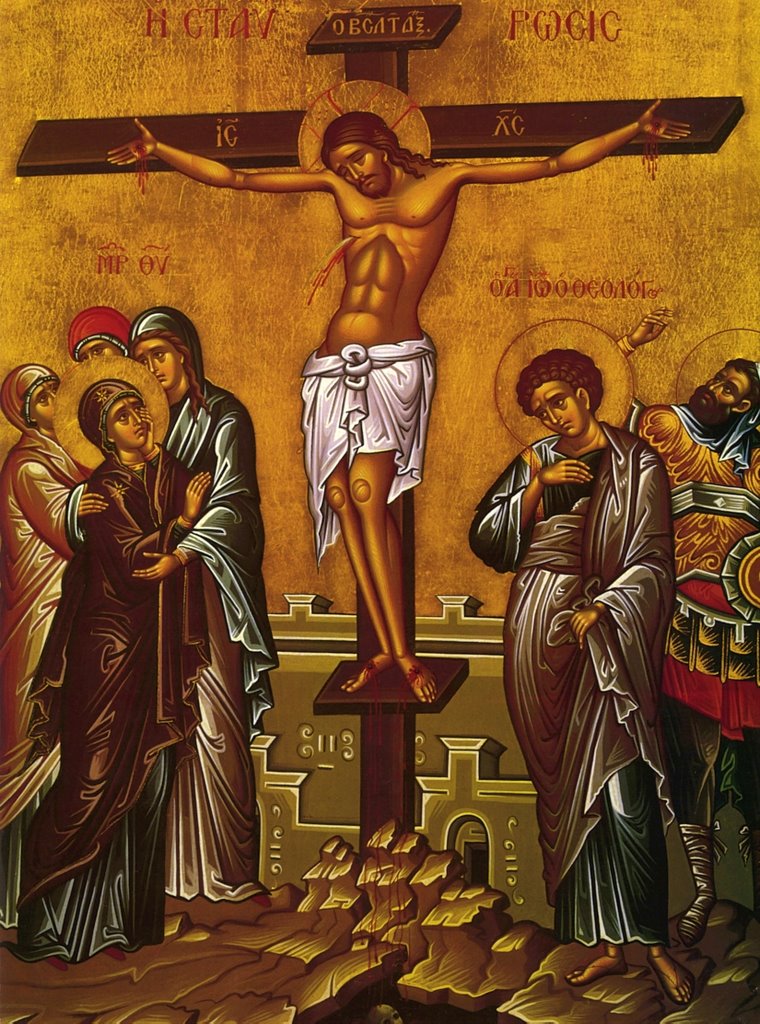
An abstract God leaves open many questions. God in Jesus answers those questions with a Way of life that questions oppressive expressions of authority, but never violently. A Way of life that humanizes the marginalized, gives voice to the voiceless, and heals the sick physically AND spiritually. A Way of life that calls for loving enemies. A Way of life that recognizes the absence of God in suffering, but that even when tortured to death prays for those inflicting the punishment. While the story does end with resurrection, it would be nice if people would look to imitate Jesus' way of life rather than defend unknown assumed mysteries at the expense of relationship. I can think of no greater deconstruction of our own grand assumptions about God than Christ crucified. Instead of trying to be right, it seems that Christians would better spend their time loving and serving with others, especially those who think differently.

Comments
Post a Comment